
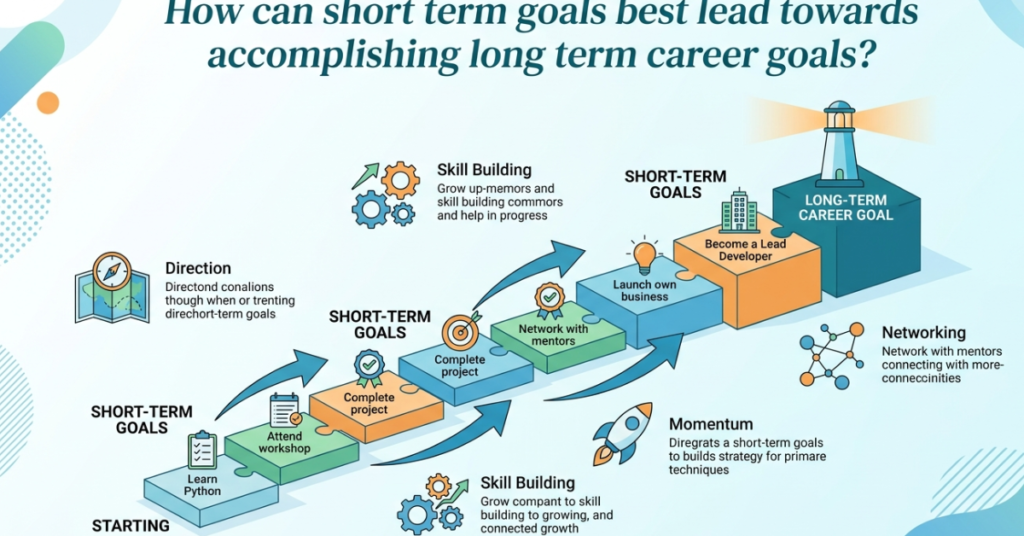

If you’ve ever wondered how can short term goals best lead towards accomplishing long term career goals, you’re already thinking in the right direction. Big career success doesn’t happen overnight—it’s built step by step through smaller, focused actions.
Short-term goals act like stepping stones that guide you toward a larger destination. When used correctly, they turn overwhelming long-term ambitions into something practical, measurable, and achievable. Let’s break down how this process actually works and how you can use it to your advantage.
Understanding Short-Term vs Long-Term Career Goals
Before connecting the two, it’s important to understand what they actually mean.
Short-term career goals:
These are goals you can achieve in days, weeks, or months.
Examples:
- Completing a certification course
- Improving a specific skill
- Updating your resume
- Networking with industry professionals
Long-term career goals:
These are bigger achievements that take years.
Examples:
- Becoming a manager or leader
- Starting your own business
- Switching to a new career field
- Reaching financial independence
Short-term goals are the “building blocks” of long-term success.
How Can Short Term Goals Best Lead Towards Accomplishing Long Term Career Goals?
This is the core idea: short-term goals create structure, momentum, and clarity for long-term achievements.
Here’s how they connect:
1. They break big goals into manageable steps
Large career goals can feel overwhelming. Short-term goals divide them into smaller, achievable tasks.
For example:
- Long-term goal: Become a data analyst
- Short-term goals:
- Learn Excel basics
- Complete SQL course
- Build 2–3 portfolio projects
2. They build consistent progress
Consistency matters more than intensity.
Short-term goals help you:
- Stay on track
- Avoid procrastination
- Build daily or weekly habits
Even small progress adds up over time.
3. They help you measure improvement
Without short-term goals, it’s hard to know if you’re improving.
They give you:
- Clear milestones
- Measurable results
- Motivation from visible progress
4. They keep you motivated
Long-term goals can feel far away, but short-term wins give you constant motivation.
Each completed step:
- Boosts confidence
- Reinforces discipline
- Encourages continued effort
5. They allow flexibility and adjustment
Career paths often change. Short-term goals help you adapt without losing direction.
You can:
- Adjust your learning path
- Change priorities
- Try new opportunities without starting over
Practical Steps to Align Short-Term and Long-Term Goals
Here’s how to make the system work in real life:
Step 1: Define your long-term career goal
Be specific. Instead of “I want a better job,” say:
- “I want to become a digital marketing manager in 3–5 years.”
Step 2: Break it into milestones
Ask yourself:
- What skills do I need?
- What experience is required?
Step 3: Set short-term goals
Turn milestones into actionable tasks:
- Learn SEO in 30 days
- Complete internship in 3 months
- Build portfolio in 6 months
Step 4: Track your progress
Use tools like:
- Notebooks
- Apps like Trello or Notion
- Weekly self-check-ins
Step 5: Review and adjust regularly
Every few weeks:
- Evaluate progress
- Fix weak areas
- Update goals if needed
Common Mistakes to Avoid
When planning how can short term goals best lead towards accomplishing long term career goals, avoid these mistakes:
- Setting unrealistic short-term goals
- Ignoring skill development
- Not tracking progress
- Losing sight of the long-term vision
- Changing direction too frequently
Why This Strategy Works in Real Careers
Professionals in every industry use this approach—whether they realize it or not.
It works because:
- Employers value consistent growth
- Skills are built step-by-step
- Experience accumulates over time
- Small wins create long-term success
FAQs
How can short term goals best lead towards accomplishing long term career goals?
They break big goals into smaller tasks, making progress manageable and consistent.
Why are short-term goals important for career success?
They help build skills, track progress, and maintain motivation.
Can short-term goals change over time?
Yes, they should evolve as your career direction and skills develop.
What is an example of linking both goals?
Learning a skill (short-term) can lead to job promotion (long-term).
How many short-term goals should I set?
Focus on 2–5 at a time to avoid overwhelm.
Conclusion
Understanding how can short term goals best lead towards accomplishing long term career goals is essential for building a successful career path. Short-term goals act as the foundation, helping you stay focused, motivated, and consistently moving forward.
When you break big ambitions into small, actionable steps, success becomes far more realistic and achievable. Start small, stay consistent, and your long-term career goals will gradually become reality.