
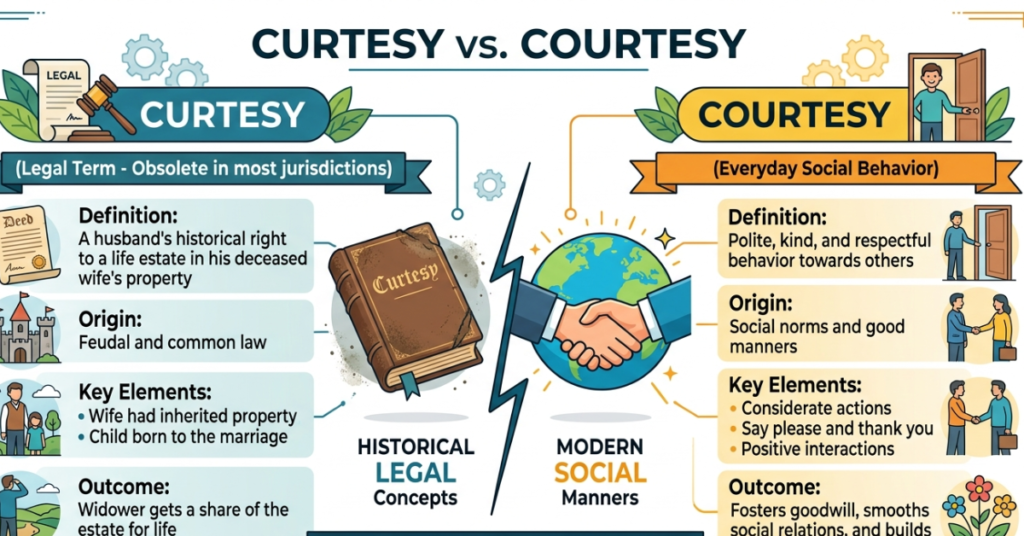

English is full of words that look almost right but can still cause confusion. One common example is curtesy vs courtesy, a spelling question that leaves many people wondering whether both words are acceptable or if one is simply a mistake.
At first glance, the two words seem interchangeable. However, understanding the difference between curtesy vs courtesy can help you avoid spelling errors and communicate more clearly in both professional and personal writing.
Is It Curtesy or Courtesy?
In modern English, courtesy is the correct spelling in most situations.
Correct word:
Courtesy means:
- Politeness
- Respectful behavior
- A kind gesture
- Good manners
Example:
She thanked him for his courtesy during the meeting.
The spelling curtesy is much less common and usually considered an outdated or mistaken variation.
Courtesy Meaning Explained
To fully understand curtesy vs courtesy, it helps to know the meaning of the correct term.
What Does Courtesy Mean?
Courtesy refers to showing kindness, respect, and consideration toward others.
Common examples of courtesy:
- Holding the door open
- Saying “please” and “thank you”
- Letting someone speak
- Respecting personal space
Courtesy can also describe something given freely.
Example:
The hotel offered complimentary drinks as a courtesy.
Curtesy Meaning: Is It a Real Word?
Many people search for curtesy meaning, and the answer is interesting.
Historical Meaning of Curtesy
The word curtesy is technically an old legal term in historical English law.
It referred to:
- A husband’s right to his deceased wife’s property under certain legal systems
This usage is now rare and mostly appears in:
- Legal history books
- Old documents
- Academic writing
Because of this, most people should use courtesy, not curtesy.
Why People Confuse Curtesy vs Courtesy
The confusion often happens because English spelling can be unpredictable.
Reasons for the mix-up:
- Similar pronunciation
- Autocorrect errors
- Typing quickly
- Misheard pronunciation
Both words sound close enough that many writers assume either spelling works.
How to Remember the Correct Spelling
A simple trick can help.
Memory tip:
Think of courtesy as related to:
court + respect = courtesy
Historically, courteous behavior was associated with royal courts and refined manners.
That can help you remember:
Courtesy = correct modern spelling
Common Examples of Courtesy in Sentences
Seeing the word in context makes it easier to remember.
Correct examples:
- Out of courtesy, she called ahead before visiting.
- He showed courtesy to everyone in the office.
- The store refunded the item as a courtesy.
Incorrect modern use:
- She thanked him for his curtesy.
Unless discussing old law, this spelling should usually be avoided.
When Curtesy Might Still Be Used
Although rare, curtesy meaning still exists in specialized contexts.
You may see curtesy in:
- Historical legal texts
- Property law archives
- Academic research papers
Example:
Tenancy by the curtesy was once recognized in common law.
For everyday writing, however:
Use courtesy
Courtesy in Professional Writing
Correct spelling matters more in formal situations.
In business writing:
Use courtesy when writing:
- Emails
- Customer service messages
- Reports
- Cover letters
Example:
Thank you for your courtesy and prompt response.
Using the wrong spelling can make your writing appear less polished.
Curtesy vs Courtesy: Quick Comparison
| Word | Meaning | Common Today |
| Courtesy | Politeness or respectful behavior | Yes |
| Curtesy | Old legal property term | Rare |