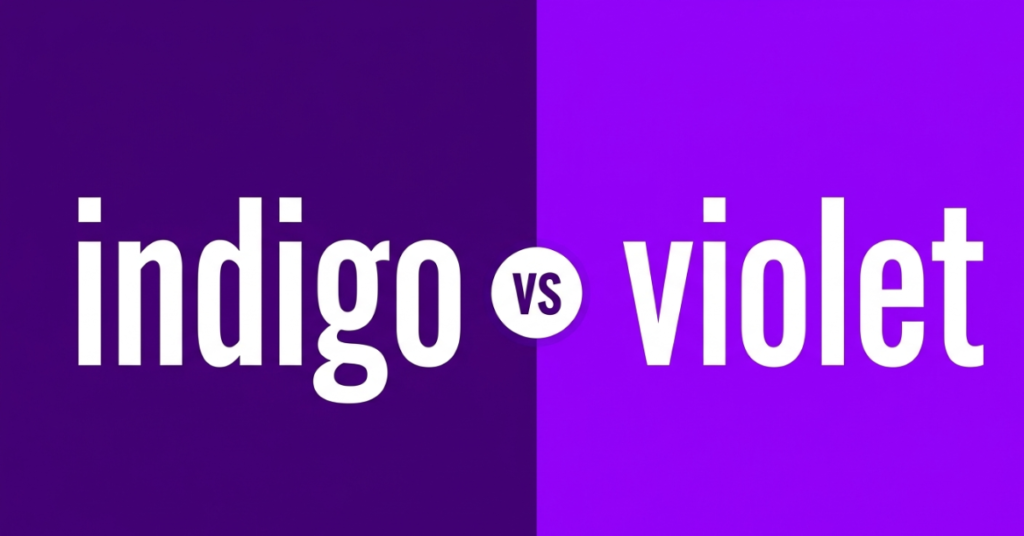
Key difference:
- Indigo leans blue
- Violet leans purple
That is why some people see indigo as a deep midnight shade, while violet feels softer and more luminous.
Violet vs Purple vs Indigo
Many people also confuse violet vs purple vs indigo, but these three colors are slightly different.
Indigo
- deeper blue-purple
- cooler appearance
- darker tone
Violet
- natural spectral color
- brighter than indigo
- more vivid
Purple
- mix of red and blue
- not a spectral color
- broader color category
Quick comparison:
- Indigo = dark blue-purple
- Violet = bright bluish-purple
- Purple = general red-blue blend
This is why purple vs indigo can be tricky—purple is broader, while indigo is more specific.
Where Indigo and Violet Appear in the Rainbow
Traditional rainbow colors are often remembered as:
Red, Orange, Yellow, Green, Blue, Indigo, Violet
Indigo appears between:
However, some modern scientists argue indigo may not deserve its own category because many people struggle to distinguish it from nearby shades.
Why the debate exists:
Human eyes do not always separate these colors clearly.
That makes violet vs indigo a surprisingly interesting topic in color science.
Why Indigo Is Sometimes Controversial
One reason indigo violet purple discussions continue is because some experts believe indigo was included mainly for historical reasons.
The controversy:
Sir Isaac Newton divided the rainbow into seven colors partly because the number seven had symbolic significance at the time.
Some modern color experts suggest the rainbow could simply be:
- red
- orange
- yellow
- green
- blue
- violet
Meaning indigo may not need a separate category.
Still, indigo remains widely recognized.
Indigo in Design and Fashion
In practical use, indigo often appears in:
Common uses of indigo:
- denim jeans
- interior design
- branding
- spiritual symbolism
Violet appears more often in:
- flowers
- cosmetics
- artistic lighting
- luxury packaging
Because indigo feels grounded while violet feels expressive.
How to Tell Them Apart
If you struggle with violet vs indigo, use this quick trick.
Ask yourself:
Does it look more blue or more purple?
- More blue → Indigo
- More purple → Violet
Visual clue:
Indigo resembles:
Violet resembles:
- bright lavender with blue
That small distinction can help instantly.
Purple vs Indigo in Everyday Language
In casual conversation, many people simply call both shades “purple.”
That happens because:
- color perception differs
- screens display colors differently
- lighting changes appearance
So while artists may care deeply about purple vs indigo, everyday speakers often group them together.
FAQs
What is the difference between indigo vs violet?
Indigo is darker and more blue, while violet is brighter and more purple.
Is indigo the same as purple?
No. Indigo is a specific blue-purple shade, while purple is a broader color family.
Which comes first, indigo or violet?
Indigo comes before violet in the traditional rainbow sequence.
Why do some people not recognize indigo?
Because indigo can look very similar to blue or violet depending on lighting.
Is violet a real spectral color?
Yes. Violet appears naturally in the visible light spectrum.
Conclusion
The difference between indigo vs violet comes down to tone, brightness, and perception. Indigo is deeper and more blue, while violet is lighter and more purple. Purple sits as the broader category that can include shades of both.
Once you understand these subtle differences, colors become much more interesting to see in art, design, and even everyday life. The next time someone mentions violet vs indigo, you will know exactly what sets them apart.