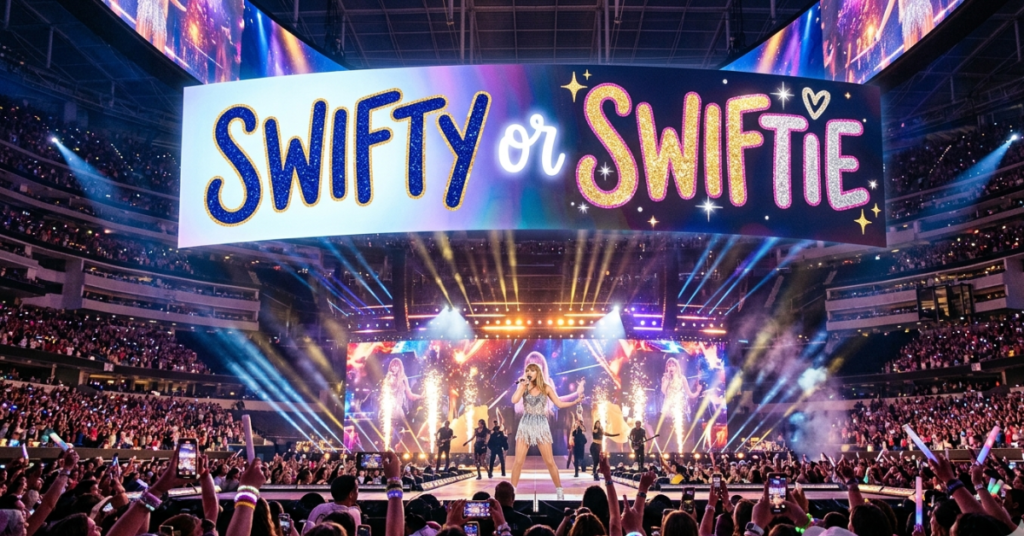

If you’ve ever heard someone say “swifty” or “swiftie” and wondered which one is right, you’re not alone. The debate around swifty or swiftie has become surprisingly common, especially among music fans and online communities.
So let’s clear it up early: “Swiftie” is the correct and widely accepted term. But why do people say “swifty”? And what exactly does it mean to be one? In this guide, we’ll break down everything you need to know about swiftie or swifty, including meaning, usage, and cultural context.
What Is a Swiftie?
Swiftie Meaning Explained
A Swiftie is a fan of Taylor Swift.
But it’s more than just casual fandom. Being a Swiftie usually means:
- Deep appreciation for her music
- Following her albums, lyrics, and storytelling
- Engaging with fan theories and online discussions
- Attending concerts and supporting her work
In short, a Swiftie is part of a global fan community.
What Is a Swifty?
Is “Swifty” a Real Term?
The word swifty does exist, but it’s not the correct term for fans.
“Swifty” can mean:
- A misspelling of Swiftie
- Someone who does something quickly (from the word “swift”)
- Informal or mistaken usage
So when comparing swifty or swiftie, “swifty” is usually incorrect in the fan context.
Swifty or Swiftie: Key Differences
Let’s break it down clearly:
| Term | Meaning | Correct Usage |
| Swiftie | Fan of Taylor Swift | Correct |
| Swifty | Misspelling or unrelated meaning | Incorrect (in fandom context) |
If you’re referring to fans, always use Swiftie.
Why “Swiftie” Is the Correct Term
Origin of the Word
The term “Swiftie” comes directly from Taylor Swift’s name.
Fans adopted it organically, and it has since become:
- Widely recognized globally
- Used in media and interviews
- Embraced by Taylor Swift herself
That’s why swiftie or swifty isn’t really a debate—Swiftie is the official term.
Why Do People Say “Swifty”?
The confusion between swifty or swiftie happens for a few reasons:
- Similar pronunciation
- Typing errors
- Lack of familiarity with fan culture
- Autocorrect mistakes
Because both words sound similar, it’s easy to mix them up.
What Makes Someone a Swiftie?
Being a Swiftie goes beyond just liking songs.
Common traits of Swifties:
- Knowing album eras (like Red, 1989, Midnights)
- Understanding lyrics and hidden meanings
- Following updates and announcements
- Participating in fan communities
It’s more of a shared identity than just a label.
Swiftie Culture and Community
A Global Fanbase
Swifties are known for being:
- Passionate
- Loyal
- Highly engaged online
They often connect through:
- Social media platforms
- Concerts and events
- Fan theories and discussions
This strong community is part of what makes the term “Swiftie” so meaningful.
How to Use “Swiftie” Correctly
Here are some simple examples:
Correct Usage:
- “She’s a huge Swiftie.”
- “Swifties are excited about the new album.”
- “I’ve been a Swiftie for years.”
Incorrect Usage:
- “I’m a swifty.” (wrong in fan context)
Common Mistakes to Avoid
When dealing with swifty or swiftie, avoid:
- Using “swifty” for fans
- Assuming both terms are interchangeable
- Misspelling in social media or writing
Using the correct term shows you understand the culture.
Quick Tips to Remember
- “Swiftie” = fan of Taylor Swift
- “Swifty” = incorrect (in this context)
- Think: Swift + “ie” = fan name
FAQs
1. Is it swifty or swiftie?
Swiftie is correct. “Swifty” is usually a mistake.
2. What is a swifty?
“Swifty” is not the correct term for fans; it’s often a misspelling of Swiftie.
3. What is a Swiftie?
A Swiftie is a fan of Taylor Swift.
4. Why do people confuse swifty and swiftie?
Because they sound similar and are often mistyped.
5. Is Swiftie an official word?
While informal, it’s widely accepted and used globally.
Conclusion
So, when it comes to swifty or swiftie, the answer is clear: Swiftie is the correct and widely recognized term. It represents a global community of fans who connect through music, storytelling, and shared passion.
While “swifty” may appear occasionally, it’s not the right word in this context. Using “Swiftie” not only ensures accuracy but also shows respect for the culture behind it.
If you’re stepping into the fandom—or just learning about it—now you know exactly which term to use confidently.