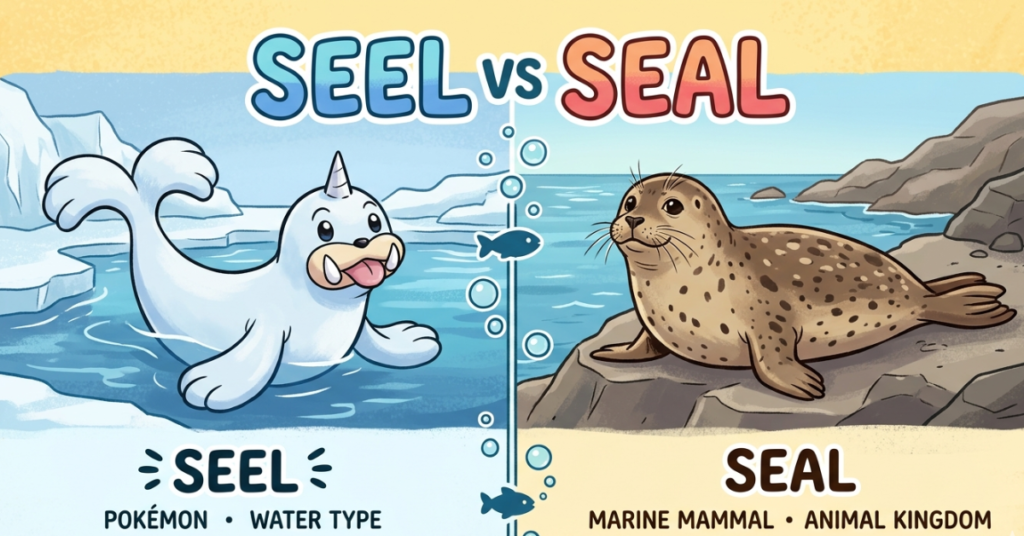

If you’ve come across the words Seel vs Seal and felt confused, you’re definitely not alone. These two look almost identical, but only one is commonly correct in modern English.
In this guide, we’ll break down the difference between Seel vs Seal, explain what each word means, and show you how to use them properly in real-life situations without mixing them up again.
Seel vs Seal: Quick Answer
Let’s clear it up right away:
- Seal = correct and widely used English word
- Seel = rare, archaic word with very limited use today
So if you’re asking Seel vs Seal, the correct modern spelling you need in almost all cases is seal.
What Does “Seal” Mean?
The word seal has multiple meanings depending on context. It is the standard word used in everyday English.
Common meanings of seal:
1. Animal (seal)
A seal is a marine animal found in cold oceans.
- Example: The seal was swimming near the shore.
2. To close tightly
To seal something means to close or secure it.
- Example: Please seal the envelope before mailing it.
3. To confirm or finalize
It can also mean to officially complete something.
- Example: The deal was sealed after negotiations.
This makes “seal” a very versatile and commonly used word.
What Does “Seel” Mean?
Now let’s talk about the confusing part of Seel vs Seal.
“Seel” is:
- An old English term (archaic)
- Rarely used in modern writing
- Found mostly in historical or poetic contexts
Meaning of “seel” (historical use):
- To blindfold or close the eyes of a bird (especially falcons in hunting)
Today, this word is almost never used in daily English.
Seel vs Seal: Key Differences Explained
Here’s a simple breakdown of Seel vs Seal:
| Word | Usage | Meaning | Modern Use |
| Seal | Common | Animal, close, or finalize | Very common |
| Seel | Rare | Old term for closing/blinding eyes | Almost obsolete |
In most real-world writing, “seal” is always the correct choice.
Why People Confuse Seel vs Seal
The confusion happens for a few simple reasons:
Common causes:
- Both words sound identical
- Spelling looks very similar
- Typing errors or autocorrect mistakes
- Exposure to rare historical texts
Because “seel” is so uncommon, many people assume it’s just a misspelling of “seal.”
Examples of “Seal” in Everyday Use
To fully understand Seel vs Seal, here are real-world examples of the correct word:
- The package was properly sealed before shipping.
- A seal appeared near the icy shore.
- The company sealed the contract yesterday.
- Please seal the jar tightly.
Notice how natural and flexible the word “seal” is in daily English.
Is “Seel” Ever Correct to Use?
Yes—but only in very specific cases.
You might see “seel” in:
- Old literature
- Historical hunting terminology
- Poetry or fantasy writing
Outside of these niche uses, it’s not recommended in modern communication.
How to Remember Seel vs Seal Easily
Here are simple memory tricks:
Easy tips:
- Think: Seal = Standard English
- “Seal” has an A, like “Always used”
- “Seel” looks unusual because it is unusual
- Associate seal with “closing something tight”
Why “Seal” Is the Word You Should Use
In modern English writing, seal is always preferred because:
- It is widely recognized
- It appears in academic and professional writing
- It avoids confusion
- It has multiple useful meanings
Simply put, “seal” is practical, correct, and universal.
FAQs
1. What is the difference between Seel vs Seal?
“Seal” is the correct modern word, while “seel” is an old and rarely used term.
2. Is seel a real word?
Yes, but it is archaic and not used in everyday English.
3. What does seal mean?
Seal can mean an animal, to close something tightly, or to finalize an agreement.
4. Why do people confuse ?
Because they sound the same and look very similar in spelling.
5. Which should I use in writing?
Always use “seal” unless you are writing historical or poetic content.
Conclusion
When it comes to Seel vs Seal, the answer is simple: seal is the correct and widely used word in modern English, while seel is an outdated term you’ll almost never need.
Understanding this difference helps you avoid common spelling confusion and improves your writing clarity in both casual and professional contexts.
If you found this helpful, you might also enjoy learning about other commonly confused words in English—small improvements like this can really sharpen your communication skills.