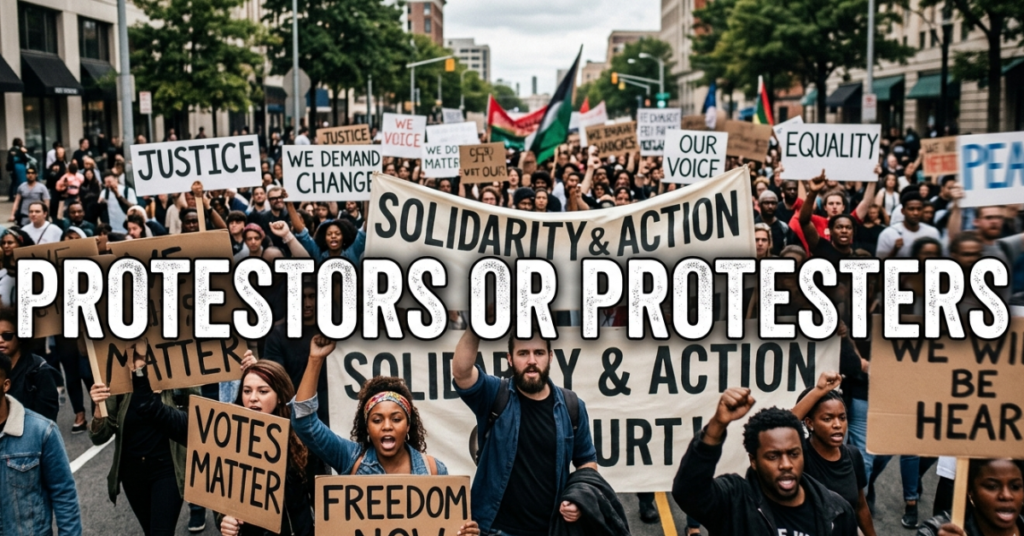

If you’ve ever paused mid-sentence wondering whether to write Protestors or Protesters, you’re not alone. This is one of those tricky English word pairs that look almost identical but can leave even confident writers second-guessing themselves.
In this guide, we’ll break down the difference between Protestors and protesters, explain which one is correct, and show you how to use the right form naturally in everyday writing.
Protestors or Protesters: The Quick Answer
Let’s clear things up right away:
- Protesters = correct and widely accepted spelling
- Protestors = less common, sometimes used but generally avoided
In modern English, “protesters” is the preferred spelling in both formal and informal writing.
What Does “Protesters” Mean?
To understand Protestors or Protesters, you first need to know what the word actually means.
Definition:
Protesters are people who publicly express objection, disagreement, or support for a cause—usually through demonstrations, rallies, or marches.
Examples:
- Protesters gathered in the city center.
- Thousands of protesters marched peacefully.
- The protesters demanded policy changes.
The word is commonly used in news, politics, and social discussions.
Is “Protestors” Ever Correct?
Here’s where the confusion comes in.
About “Protestors”:
- It is technically a recognized variant
- However, it is rarely used in modern English
- Many style guides recommend avoiding it
While you might see “Protestors” occasionally, it’s not the standard spelling today.
Why “Protesters” Is Preferred
The preference for protesters over Protestors comes down to language patterns and usage.
Reasons:
- Most English agent nouns use “-er” endings
- Teacher
- Writer
- Speaker
- “Protester” follows this common pattern
- Major dictionaries and media outlets favor “protesters”
That’s why Protestors or Protesters isn’t really a close contest—“protesters” clearly wins.
Protestors or Protesters: Side-by-Side Comparison
Here’s a quick comparison to make things crystal clear:
| Word | Correct? | Usage |
| Protesters | Yes | Standard, widely accepted |
| Protestors | Rare | Uncommon, not recommended |
When to Use “Protesters” in Writing
If you’re unsure how to use the correct form, here are some common situations:
Use “protesters” when:
- Writing essays or articles
- Creating blog content
- Posting on social media
- Reporting news or events
Basically, use “protesters” in all modern writing contexts.
Common Mistakes to Avoid
When dealing with Protestors or Protesters, here are a few mistakes people often make:
Mistakes:
- Mixing both spellings in the same document
- Assuming “Protestors” is more formal
- Using outdated spelling habits
Fix:
- Stick with “protesters” consistently
Similar Word Patterns in English
Understanding Protestors or Protesters becomes easier when you look at similar words.
Examples:
- Actor (not acter )
- Editor (not editer )
- Driver (not drivor )
While “-or” endings exist, “-er” is more common for people performing actions.
Why Spelling Matters in Communication
Choosing between Protestors or Protesters might seem small, but it matters.
Benefits of correct spelling:
- Builds credibility
- Improves readability
- Avoids confusion
Especially in professional writing, small details make a big difference.
FAQs
1. Protestors or Protesters — which is correct?
“Protesters” is the correct and widely accepted spelling.
2. Is “Protestors” wrong?
It’s not entirely wrong, but it’s outdated and rarely used today.
3. Why is “protesters” preferred?
Because it follows common English spelling patterns and is used by major dictionaries and media.
4. Can I use “Protestors” in formal writing?
It’s best to avoid it and use “protesters” instead.
5. Do both words mean the same thing?
Yes, both refer to people who protest, but “protesters” is the standard form.
Conclusion
When it comes to Protestors or Protesters, the answer is clear: “protesters” is the correct, modern, and widely accepted spelling.
While “Protestors” may appear occasionally, it’s best treated as an outdated or less common variant. Sticking with “protesters” ensures your writing stays clear, professional, and aligned with current English usage.
If you’re looking to improve your writing further, mastering small distinctions like this is a powerful step toward becoming a more confident and polished communicator.