
If you’ve ever typed “plack vs plaque” and paused to wonder which one is correct, you’re definitely not alone. It’s one of those tricky word confusions that shows up in both writing and everyday conversation.
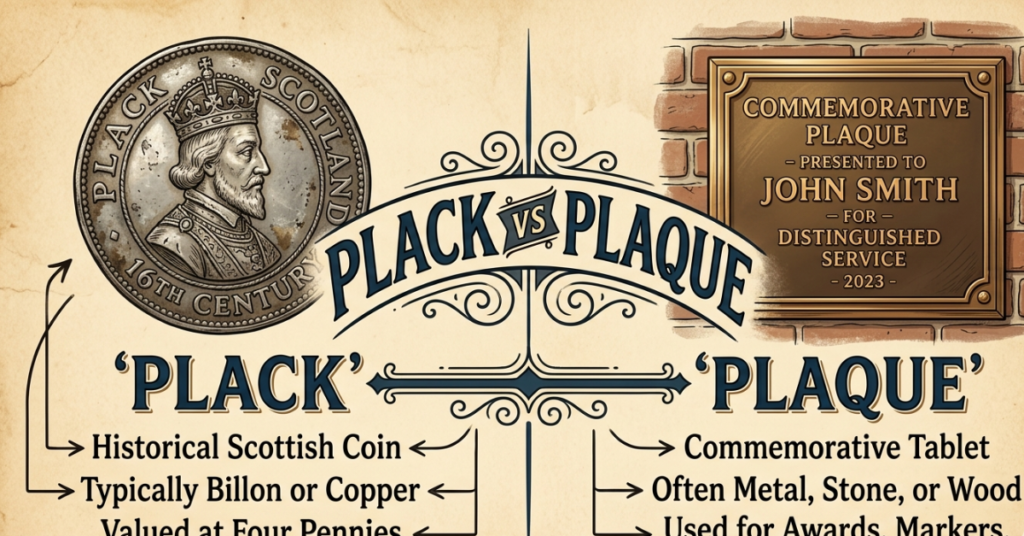
Here’s the quick answer: “plaque” is the correct word, while “plack” and even “placque” are misspellings. But understanding why helps you avoid making the mistake again. In this guide, we’ll break down the meaning, usage, and differences in plack vs plaque, along with real-life examples.
Plack vs Plaque: Which One Is Correct?
Correct: Plaque
Incorrect: Plack / Placque
If you’re asking about plack vs plaque or even placque vs plaque, the correct spelling in standard English is always plaque.
“Plack” and “placque” are not recognized words in proper English usage.
What Does “Plaque” Mean?
Understanding the meaning of plaque makes it easier to remember and use correctly.
Common Meanings of Plaque:
- Dental Plaque
- A sticky film of bacteria that forms on teeth
- Example: Brushing daily helps remove plaque.
- Commemorative Plaque
- A flat plate or sign used to honor a person or event
- Example: A plaque was placed on the wall to remember the founder.
- Medical Plaque
- A buildup in arteries (often linked to heart health)
- Example: Arterial plaque can restrict blood flow.
So depending on the context, plaque can relate to health, dentistry, or recognition.
Why Do People Write “Plack” or “Placque”?
The confusion behind plack vs plaque and placque vs plaque usually comes from pronunciation.
Reasons for the Mistake:
- “Plaque” is pronounced like “plak”
- People spell it the way it sounds
- English spelling rules can be inconsistent
Because of this, many assume “plack” is correct—but it’s not.
Plack vs Plaque in Real-Life Examples
Let’s look at how the correct word is used in everyday situations.
Correct Usage:
- The dentist removed plaque from my teeth.
- A bronze plaque was installed at the entrance.
- Poor diet can lead to plaque buildup in arteries.
Incorrect Usage:
- The dentist removed plack from my teeth.
- A memorial plack was placed on the wall.
Seeing examples helps eliminate confusion between plack vs plaque.
How to Remember the Correct Spelling
If you struggle with placque vs plaque, here are a few easy tricks:
- “Plaque” has a unique French-style spelling—that’s normal
- Think: Plaque = Dental care (fancy word)
- Avoid phonetic spelling like “plack”
- Double-check in formal writing
Plaque in Health and Daily Life
The word “plaque” is more important than it seems—especially in health contexts.
Types of Plaque You Should Know:
1. Dental Plaque
- Forms on teeth daily
- Can lead to cavities and gum disease
- Prevented by brushing and flossing
2. Arterial Plaque
- Builds up in blood vessels
- Can increase the risk of heart disease
- Managed through diet and lifestyle
3. Decorative Plaque
- Used in homes, offices, or memorials
- Displays achievements or information
Common Mistakes to Avoid
When dealing with plack vs plaque, avoid these errors:
Writing “plack” in formal documents
Using “placque” as an alternative spelling
Ignoring spell-check suggestions
Assuming pronunciation equals spelling
Stick with plaque every time.
Why Correct Usage Matters
Using the right word in plack vs plaque isn’t just about grammar—it impacts clarity.
Benefits of Using “Plaque” Correctly:
- Improves writing accuracy
- Enhances professionalism
- Avoids confusion in medical or dental contexts
- Builds trust in communication
FAQs – Plack vs Plaque
1. Is “plack” a real word?
No, “plack” is not a correct English word in this context.
2. What is the correct spelling: plack or plaque?
The correct spelling is plaque.
3. What does plaque mean in dentistry?
It refers to a sticky layer of bacteria that forms on teeth.
4. Is “placque” correct?
No, “placque” is also incorrect. The correct spelling is plaque.
5. Why is plaque spelled differently?
It comes from French, which is why the spelling doesn’t match pronunciation exactly.
Conclusion
When it comes to plack vs plaque or placque vs plaque, the answer is simple: “plaque” is the only correct spelling. While the pronunciation might make “plack” seem right, it’s not accepted in standard English.
Understanding the meaning and proper usage of “plaque” helps you avoid common mistakes—whether you’re talking about dental hygiene, health, or commemorative signs.
If you want to improve your writing, mastering small distinctions like this goes a long way. Keep learning, keep practicing, and your grammar will only get stronger.