
You’ve probably heard someone mention an “outie” and wondered what exactly it means. Is it just about belly buttons, or does it have other meanings too? If you’re searching for the outie meaning, you’re in the right place.
In simple terms, an “outie” usually refers to a belly button that sticks outward instead of inward. But there’s more to it than that. In this guide, we’ll break down what’s an outie, why people have them, and how the term is used in everyday language.
What Is an Outie?
Let’s start with the basics.
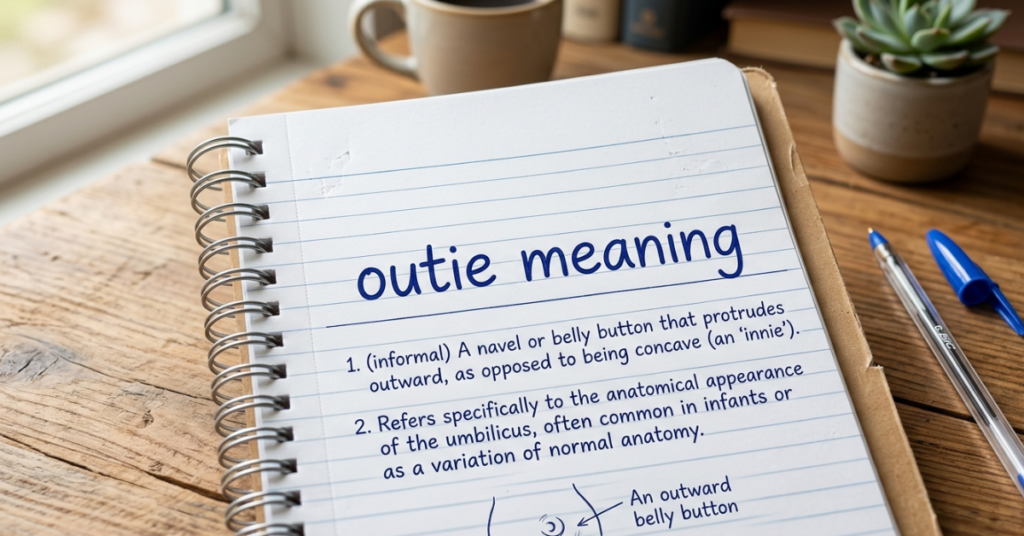
Outie meaning (simple definition):
An outie is a type of belly button that protrudes outward rather than being indented.
Outie vs innie:
- Outie: Sticks out from the abdomen
- Innie: Goes inward (more common)
So when someone asks what’s an outie, they’re usually referring to this physical trait.
Why Do People Have Outies?
One of the most common questions is: why do people have outies?
The real reason:
Outies are formed during the healing process of the umbilical cord after birth.
Key factors:
- How the umbilical cord heals
- Natural body variation
- Sometimes minor umbilical hernias
It’s important to know:
- Outies are completely normal
- They’re not caused by how the cord was cut
- They don’t usually indicate health issues
Are Outies Common?
Compared to innies, outies are less common—but still perfectly natural.
Quick stats:
- Around 90% of people have innies
- About 10% have outies
So if you have an outie, you’re just part of a smaller (but totally normal) group.
Are Outies a Health Concern?
In most cases, outies are harmless.
When to check with a doctor:
- Pain or swelling
- Sudden change in shape
- Signs of infection
Sometimes, an outie can be linked to a small umbilical hernia, especially in babies—but many of these resolve on their own.
Outie Meaning Beyond Belly Buttons
Interestingly, the term “outie” isn’t always about anatomy.
Other uses of “outies”:
- Slang for something sticking out
- Pop culture references (e.g., identity split concepts)
- Casual humor or teasing
So depending on the context, outies can have a broader meaning than just physical appearance.
Can You Change an Outie?
A lot of people wonder if they can change their belly button type.
The answer:
- Naturally, no
- Surgically, yes (cosmetic procedures exist)
However, most people choose to keep their natural shape—because it’s completely normal and unique.
Outies vs Innies: Which Is Better?
There’s no “better” option—it’s purely a matter of body variation.
Key takeaway:
- Both are normal
- Both are healthy
- It’s just about how your body healed
Trying to compare them is like comparing eye color—there’s no right or wrong.
Fun Facts About Outies
- Babies are more likely to have temporary outies
- Some outies flatten over time
- They’re not determined by genetics alone
- Everyone’s belly button is unique
FAQs
What is the outie meaning?
An outie is a belly button that sticks outward instead of inward.
What’s an outie in simple terms?
It’s a type of navel that protrudes rather than being indented.
Why do people have outies?
Outies form naturally during the healing of the umbilical cord after birth.
Are outies normal?
Yes, they’re completely normal and usually harmless.
Can an outie become an innie?
In some cases (especially in infants), it may change over time, but not always.
Conclusion
Understanding the outie meaning is pretty simple once you break it down. It’s just one of the many natural variations in the human body—nothing strange or concerning.
Whether you have an outie or an innie, the key takeaway is this: both are completely normal. Now that you know what’s an outie and why people have outies, you can appreciate it as just another unique feature that makes each body different.
Curious about other everyday terms and meanings? Keep exploring—you’d be surprised how many simple words have interesting stories behind them.