
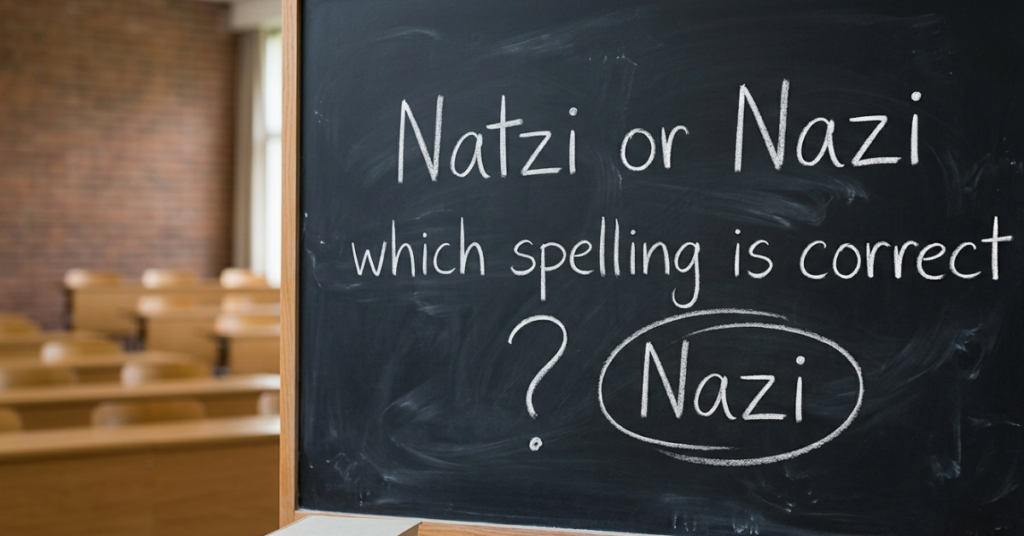

You might have seen both “natzi or nazi” online and wondered which one is actually correct. It’s an important question—not just for spelling, but for understanding history accurately.
Here’s the truth: “Nazi” is the correct spelling, while “natzi” is simply a misspelling. But beyond spelling, the word carries deep historical meaning tied to one of the most significant and tragic periods in modern history.
Let’s break down the natzi or nazi confusion, explore the nazi meaning, and understand why using the correct term matters.
Natzi or Nazi Meaning: The Key Difference
Quick Answer:
- Nazi = Correct spelling
- Natzi = Incorrect spelling (common typo)
The confusion usually comes from pronunciation. Some people hear an extra “t” sound, but it doesn’t exist in the correct spelling.
What Does “Nazi” Mean?
The term Nazi refers to a member of the Nazi Party, officially known as the National Socialist German Workers’ Party.
Nazi Meaning (Simple Explanation):
- A political ideology and movement in Germany
- Led by Adolf Hitler
- Associated with authoritarian rule, extreme nationalism, and racism
Historical Context:
The Nazi regime ruled Germany from 1933 to 1945 and was responsible for major global events, including World War II and the Holocaust.
Because of this history, the word “Nazi” carries serious weight and should be used carefully and accurately.
Why Do People Write “Natzi”?
The misspelling “natzi” is more common than you might think.
Reasons Behind the Mistake:
- Mishearing the pronunciation
- Typing errors or autocorrect issues
- Lack of familiarity with the term
However, in formal writing or serious discussions, using “natzi” can come across as incorrect or uninformed.
Understanding Nazi Symbols and Flags
When people search for natzi symbol or natzi flag, they are usually referring to historical imagery associated with the Nazi regime.
Key Points:
- The nazi flag featured a red background with a white circle and a black swastika
- These symbols are strongly linked to Nazi ideology and history
- In many countries, displaying such symbols is restricted or illegal
It’s important to understand these symbols in a historical and educational context, not as something to promote or glorify.
Why Correct Spelling Matters
Using the correct spelling—Nazi instead of natzi—is more than just grammar.
Here’s Why:
- It shows accuracy and awareness
- It respects the seriousness of historical events
- It avoids confusion in communication
In topics related to history, small mistakes can lead to big misunderstandings.
Common Mistakes Related to “Natzi or Nazi”
Incorrect:
- Natzi
- Natzi flag
- Natzi symbol
Correct:
- Nazi
- Nazi flag
- Nazi symbol
Always double-check spelling when discussing sensitive or historical topics.
When Is the Term “Nazi” Used Today?
Today, the word “Nazi” can appear in different contexts:
1. Historical Discussions
Used when talking about World War II, Germany, or political history.
2. Educational Content
Found in textbooks, documentaries, and academic studies.
3. Figurative Use (Be Careful)
Sometimes used casually (e.g., “grammar Nazi”), but this can be controversial and insensitive.
Quick Summary: Filed vs Filled Style Comparison
| Term | Status | Meaning |
| Nazi | Correct | Historical political group in Germany |
| Natzi | Incorrect | Misspelling of “Nazi” |