
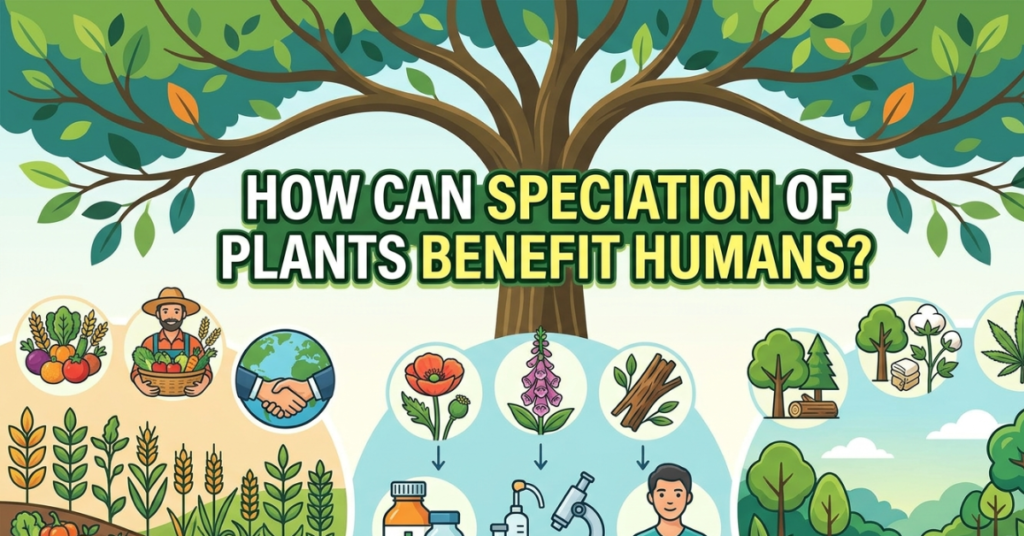

If you’ve ever wondered how can speciation of plants benefit humans?, you’re actually asking one of the most important questions in biology and environmental science. Plant speciation—the process where new plant species evolve over time—quietly shapes much of the food we eat, the medicines we use, and even the air we breathe.
It might sound like a distant scientific concept, but in reality, plant speciation is directly connected to human survival and progress. From improved crops to new medicinal discoveries, the benefits are everywhere once you start looking closely.
Let’s break it down in a simple, practical way.
What Is Plant Speciation?
Plant speciation is the evolutionary process where new plant species develop from existing ones. This usually happens due to:
- Environmental changes (climate, soil, water availability)
- Geographic isolation (mountains, islands, forests)
- Genetic mutations over time
- Natural selection and adaptation
Over long periods, these changes create entirely new species with unique traits.
How Can Speciation of Plants Benefit Humans?
Now let’s get to the core question: how can speciation of plants benefit humans? The answer lies in multiple areas of everyday life and long-term survival.
1. Improved food diversity and agriculture
One of the biggest benefits of plant speciation is food variety.
New plant species lead to:
- More crops for human consumption
- Better taste and nutrition options
- Increased resistance to pests and diseases
- Improved crop yields over time
For example, many modern fruits and vegetables are the result of long-term plant evolution and selective breeding influenced by natural speciation processes.
2. Development of medicines
Plants are a major source of medicine, and speciation plays a huge role in this.
Different plant species can produce:
- Unique chemical compounds
- Natural antibiotics
- Pain relievers and anti-inflammatory agents
- Cancer-fighting substances
Many life-saving drugs originally came from plants that evolved specific defensive chemicals over time.
3. Increased biodiversity and ecosystem stability
When more plant species exist, ecosystems become stronger and more stable.
This benefits humans by:
- Maintaining healthy soil
- Supporting pollinators like bees
- Preventing erosion and desertification
- Balancing oxygen and carbon dioxide levels
A diverse plant world means a healthier planet for everyone.
4. Climate resilience and adaptation
As climate conditions change, new plant species help ecosystems adapt.
Plant speciation contributes to:
- Heat-resistant crops
- Drought-tolerant vegetation
- Flood-resistant plant varieties
This is crucial for future food security in a changing climate.
5. Economic benefits and new industries
Plant speciation also supports human economies.
It leads to:
- Agricultural innovation
- Herbal and pharmaceutical industries
- Forestry and sustainable materials
- New food products and markets
In simple terms, more plant diversity often means more economic opportunities.
6. Scientific research and genetic improvement
Scientists study plant speciation to:
- Improve crop genetics
- Understand evolution and adaptation
- Create hybrid plants with better traits
- Develop sustainable farming methods
This research directly improves agricultural productivity worldwide.
Why Plant Speciation Matters More Today Than Ever
With climate change and population growth, plant diversity is under pressure. Protecting and understanding speciation helps ensure:
- Food security
- Environmental balance
- Long-term sustainability
In short, plant evolution is not just history—it’s the future of human survival.
FAQs
How can speciation of plants benefit humans?
It benefits humans by increasing food variety, improving medicines, supporting ecosystems, and helping agriculture adapt to environmental changes.
What is plant speciation in simple terms?
It is the process where new plant species evolve from existing ones over time.
Why is plant diversity important for humans?
Because it supports food production, medicine development, and environmental balance.
Can plant speciation help fight climate change?
Yes, it can produce more resilient plant species that survive extreme weather conditions.
Do humans influence plant speciation?
Yes, through agriculture, selective breeding, and environmental changes.
Conclusion
So, how can speciation of plants benefit humans? The answer is simple but powerful: it supports nearly every part of human life—from food and medicine to climate resilience and economic growth.
Plant speciation is nature’s way of innovating, constantly creating new solutions to environmental challenges. The more we understand and protect it, the better our chances of building a sustainable future.
If anything, plant evolution reminds us that life is always adapting—and humans depend on that adaptation more than we often realize.