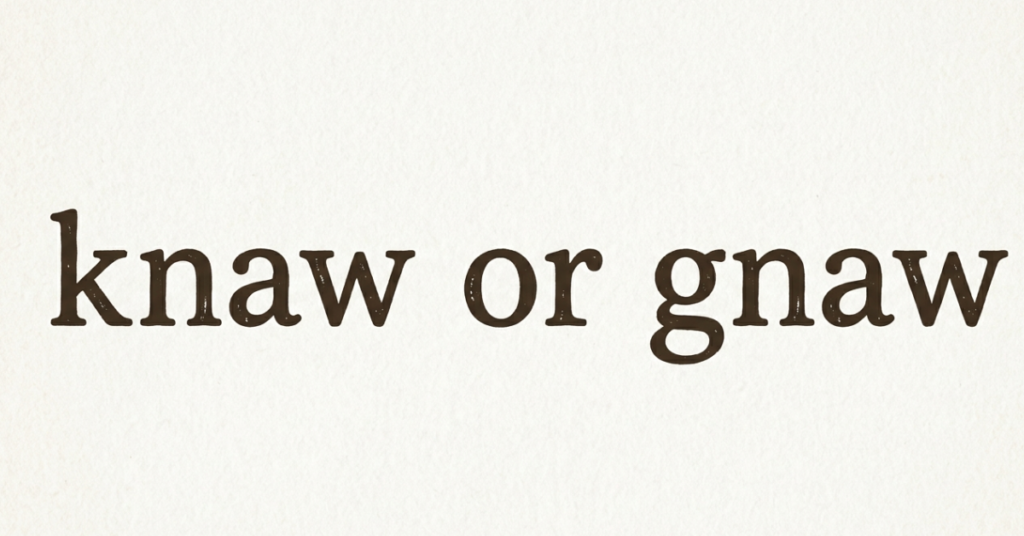

English has a way of making simple words surprisingly confusing. One spelling question that catches many people off guard is knaw or gnaw, especially because both versions can look believable at first glance.
If you have ever typed knaw meaning into a search bar, you are definitely not the only one. The good news is that the answer is straightforward once you understand where the word comes from and how it is used in everyday language.
Knaw or Gnaw: The Correct Word
The correct spelling is:
Gnaw
The word gnaw means to bite, chew, or wear something down gradually.
Example sentences:
- The puppy began to gnaw on the chair leg.
- Worry can gnaw at your mind all day.
- Mice often gnaw through cardboard boxes.
The spelling knaw is considered incorrect in standard English.
What Does Gnaw Mean?
To better understand gnaw or knaw, it helps to know the exact meaning of the correct word.
Gnaw can mean:
- To chew repeatedly
- To bite slowly
- To wear away gradually
- To trouble emotionally over time
Physical example:
- Rabbits gnaw on wood to keep their teeth short.
Emotional example:
- Guilt continued to gnaw at him.
The word can describe both physical and emotional experiences.
Why People Write Knaw Instead of Gnaw
The confusion between gnaw or knaw usually comes from pronunciation.
Because the “g” in gnaw is silent, the word sounds like:
naw
That silent first letter makes many people guess the spelling incorrectly.
Common reasons for the mistake:
- Silent letters in English
- Phonetic spelling habits
- Similar words like “know”
- Autocorrect confusion
Since words like “knee” and “know” start with silent k, some people assume knaw must be correct.
Is Knaw a Real Word?
People often search for knaw meaning, but in modern English:
Knaw is not a standard dictionary word.
It is usually:
- A misspelling of gnaw
- A typing error
- A phonetic guess
Unless used as a name or regional variation, knaw is not correct in formal writing.
How to Remember the Correct Spelling
Remembering the difference between knaw or gnaw becomes easier with a simple trick.
Memory tip:
Think of:
G = Grinding teeth
Since gnawing involves repeated chewing, the silent g can remind you of that action.
Common Uses of Gnaw
The word appears in both literal and figurative writing.
Physical use
Animals often gnaw on objects.
Example:
- Beavers gnaw through tree trunks.
Emotional use
Feelings can also gnaw at someone.
Example:
- Doubt began to gnaw at her confidence.
That versatility makes the word more useful than many people realize.
Gnaw in Everyday Expressions
You may hear the word in phrases like:
- Gnaw at your conscience
- Gnaw at your stomach
- Gnaw away
- Gnaw through
These expressions often describe slow, persistent discomfort.
Similar Words People Confuse With Gnaw
English spelling creates several confusing word pairs.
People sometimes mix up:
- Gnaw vs know
- Gnaw vs naw
- Gnaw vs gnar
- Gnaw vs knaw
Understanding pronunciation helps avoid these mistakes.
Why Correct Spelling Matters
Using the right spelling can improve:
- Professional writing
- School assignments
- Online content
- Reader trust
- Search visibility
Even a small spelling mistake can distract readers.
FAQs
Is knaw or gnaw correct?
The correct spelling is gnaw.
What does gnaw mean?
It means to chew, bite, or wear something down slowly.
What is knaw meaning?
Knaw has no standard meaning because it is usually a misspelling of gnaw.
Why is the g in gnaw silent?
The word comes from older English forms where the pronunciation changed over time.
Can gnaw be used emotionally?
Yes. It can describe feelings that slowly bother someone.
Conclusion
When it comes to knaw or gnaw, the correct spelling is always gnaw. While knaw may seem logical because of English pronunciation patterns, it is considered a misspelling in modern writing.
Understanding the meaning and usage of gnaw can help you write more confidently and avoid a very common language mistake. The next time the word comes up, you will know exactly which spelling belongs on the page.