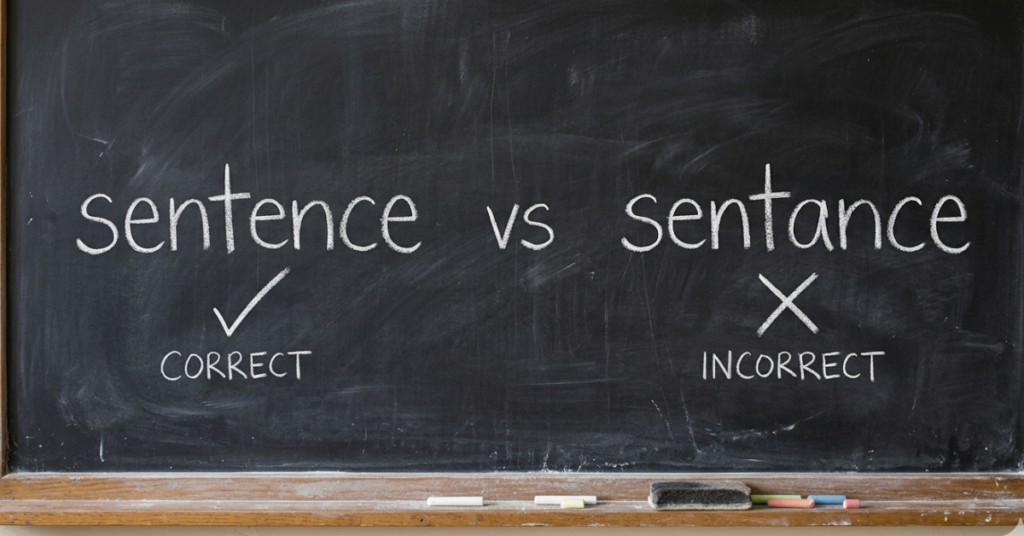

If you’ve ever typed “sentance” and wondered if it looks a little off—you’re right to question it. The confusion around sentence vs sentance is incredibly common, especially for learners and even fluent writers typing quickly.
Here’s the short answer:
“Sentence” is correct. “Sentance” is a misspelling.
But there’s more to it than just spelling. Let’s break it down in a simple, practical way so you’ll never second-guess yourself again.
What Is a Sentence? (Correct Meaning Explained)
A sentence is one of the most basic building blocks of writing. It expresses a complete thought and usually includes a subject and a verb.
Simple Examples:
- She is reading a book.
- The sun rises in the east.
- I love learning new things.
Each of these is a complete sentence—clear, structured, and meaningful.
Why “Sentance” Is Incorrect
Now let’s talk about sentance vs sentence.
“Sentance” is not a real word in standard English. It’s simply a spelling mistake that often happens because:
- The pronunciation of “sentence” can sound like sen-tence
- People assume the middle vowel is “a” instead of “e”
- Typing quickly leads to common spelling slips
Incorrect Example:
- This is a complete sentance.
Correct Version:
- This is a complete sentence.
Sentence vs Sentance: Key Differences
Here’s a quick breakdown to make things crystal clear:
| Word | Is It Correct? | Meaning |
| Sentence | Yes | A complete thought in writing |
| Sentance | No | Misspelling of “sentence” |
If you’re choosing between sentence or sentance, always go with sentence.
How to Spell “Sentence” Correctly
Spelling can be tricky, but here’s a simple trick to remember:
Think of “sent” + “ence”
- “Sent” (like sending a message)
- “ence” (a common word ending, like in “difference”)
Memory Tip:
“A sentence is something you sent to express a thought.”
This mental shortcut helps reinforce the correct spelling every time.
Common Mistakes with Sentence Spelling
When dealing with sentance vs sentence, here are a few common errors to avoid:
- Writing “sentance” in essays or emails
- Mixing up vowels in the middle of the word
- Ignoring spell-check suggestions
Pro Tip:
Most writing tools (like Word or Google Docs) will automatically underline “sentance”—don’t ignore it!
Types of Sentences (Bonus Learning)
While we’re here, it’s useful to know the main types of sentences:
1. Declarative Sentence
Makes a statement
- “I enjoy reading.”
2. Interrogative Sentence
Asks a question
- “Do you like books?”
3. Imperative Sentence
Gives a command
- “Close the door.”
4. Exclamatory Sentence
Shows strong emotion
- “What a beautiful day!”
Understanding this helps you go beyond just spelling and actually improve your writing skills.
Why People Confuse Sentance or Sentence
The confusion between sentance or sentence mostly comes from pronunciation. In casual speech, the word doesn’t clearly emphasize the “e,” leading many to assume it’s spelled with an “a.”
This is a classic example of a phonetic spelling mistake, where we write words the way they sound instead of how they’re actually spelled.
FAQs About Sentence vs Sentance
1. Is “sentance” ever correct?
No, sentance is always incorrect. The correct spelling is sentence.
2. Why do people write “sentance”?
Because of pronunciation and common spelling confusion.
3. How do I remember the correct spelling?
Use the trick: “sent” + “ence”.
4. What is a sentence in grammar?
A sentence is a group of words that expresses a complete thought.
5. Is this mistake common?
Yes, sentance vs sentence is one of the most frequent spelling mistakes in English.
Conclusion: Always Choose “Sentence”
When it comes to sentence vs sentance, the rule is simple and non-negotiable:
“Sentence” is correct. “Sentance” is wrong.
Getting this right not only improves your writing but also makes you appear more polished and professional. Small spelling details can make a big difference—especially in emails, academic work, and content writing.
If you want to sharpen your grammar even further, keep learning commonly confused words and practice writing regularly. Your future self (and your readers) will thank you!