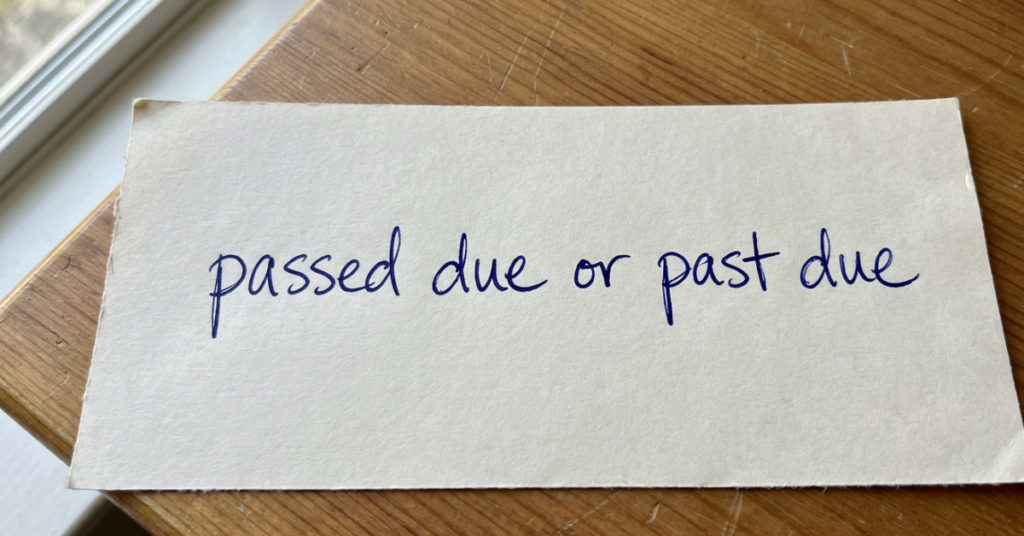

Ever paused mid-sentence wondering whether to write “past due” or “passed due”? You’re not alone. This small wording confusion shows up everywhere—from emails and invoices to professional documents.
In this guide, we’ll break down the correct usage of passed due or past due, explain why one is right and the other isn’t, and help you avoid this common grammar mistake for good.
What Does “Past Due” Mean?
Let’s start with the correct term: past due.
“Past due” means something is overdue—typically referring to a payment, deadline, or obligation that hasn’t been completed on time.
Examples:
- Your electricity bill is past due.
- The assignment is past due by two days.
- Payment is now past due.
In simple terms, if something has gone beyond its due date, it is past due.
Why “Passed Due” Is Incorrect
Now let’s address the confusion
While it may sound similar, “passed due” is grammatically incorrect in this context.
Here’s why:
- “Passed” is the past tense of the verb pass (e.g., “She passed the test”).
- “Past” is a preposition or adjective that refers to time (e.g., “past the deadline”).
So when you say “this,” you’re mistakenly using a verb where a time-related word is needed.
Incorrect Example:
- The invoice is passed due.
Correct Version:
- The invoice is past due.
Past Due vs Passed Due: Key Differences
Understanding past due or this becomes easy when you break it down:
| Term | Part of Speech | Meaning | Correct Usage |
| Past due | Adjective phrase | Something overdue | Yes |
| Passed due | Verb phrase | Incorrect in this context | No |
Quick tip: If you’re talking about time or deadlines, always use past due.
Common Situations Where “Past Due” Is Used
You’ll often see past due in everyday and professional communication.
1. Billing and Payments
- “Your account is past due. Please pay immediately.”
2. Deadlines and Tasks
- “The project is past due by one week.”
3. Subscriptions or Services
- “Your membership renewal is past due.”
These are all correct uses of past due or this, where only past due fits.
Easy Trick to Remember the Correct Form
If you’re still unsure whether to use past due or passed due, here’s a simple trick:
Replace the word with “late”.
- If “late” makes sense → use past due
- If it doesn’t → rethink the sentence
Example:
- “The payment is late” → So, “The payment is past due”
Common Mistakes to Avoid
Even experienced writers mix this up. Here are some mistakes to watch out for:
- Writing “passed due” in emails or invoices
- Using “passed” when referring to deadlines
- Assuming both phrases are interchangeable
Pro Tip:
Always double-check professional communication—especially billing notices—because “past due” is the only correct form.
Why This Mistake Happens
The confusion between past due or passed due comes down to pronunciation. Both words sound identical in speech, making it easy to mix them up in writing.
This is known as a homophone error—words that sound the same but have different meanings and spellings.
Read also <<< Tought vs Taught
FAQs About Past Due vs Passed Due
1. Is it “past due” or “passed due”?
It is always when referring to something overdue.
2. Is “passed due” ever correct?
No, thus is not correct in this context.
3. What does “past due” mean?
It means something has gone beyond its deadline or due date.
4. Can I use “passed” in any similar situation?
Only when referring to an action, like “He passed the exam,” not for deadlines.
5. Why do people confuse past and passed?
Because they sound the same but have different meanings and grammatical roles.
Conclusion: Always Use “Past Due”
When it comes to passed due or past due, the rule is simple:
“Past due” is correct. “Passed due” is not.
Remember, if something is late, overdue, or beyond its deadline, it’s past due—no exceptions. Getting this right not only improves your grammar but also makes your communication look more professional and polished.
If you found this helpful, consider exploring other commonly confused words to sharpen your writing even further.