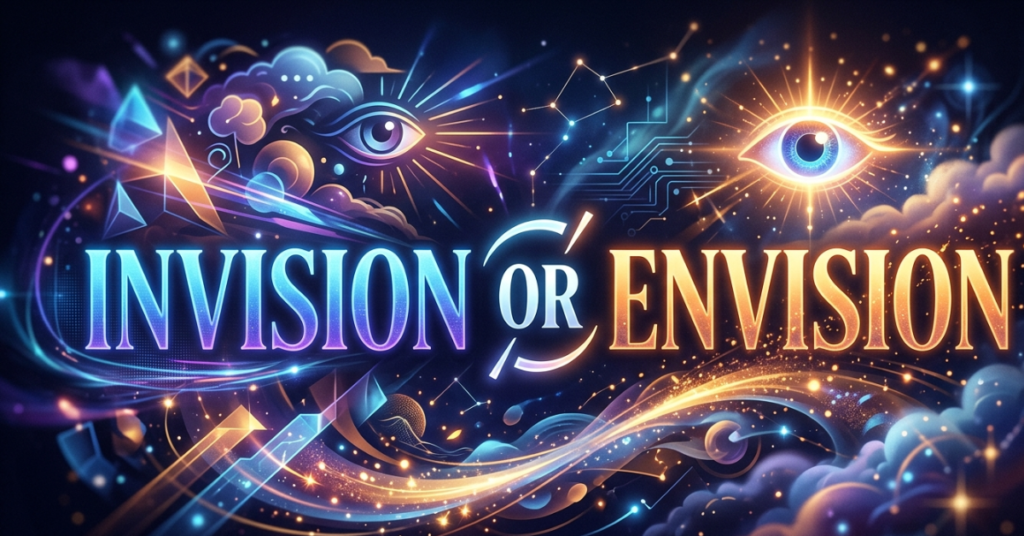

Have you ever typed “invision or envision” and wondered which one is actually correct? You’re not alone. This common spelling confusion shows up in emails, essays, and even professional writing more often than you’d think.
In this guide, we’ll break down the difference between invision or envision, explain why one is correct and the other isn’t, and show you how to use the right word confidently every time.
Invision or Envision — What’s the Correct Word?
Let’s clear this up right away:
- Envision = correct spelling
- Invision = incorrect spelling (in most contexts)
The word you’re looking for is envision, which means to imagine, visualize, or picture something in your mind.
Why “Invision” Is Incorrect
“Invision” is not a standard English word. It usually appears because:
- People confuse the prefix “en-” with “in-”
- It sounds similar when spoken quickly
- It looks plausible, especially in informal writing
However, dictionaries and grammar guides do not recognize “invision” as a correct spelling.
What Does Envision Mean?
Envision is a verb that means:
To imagine or picture something clearly in your mind, especially something in the future.
Examples:
- I envision a world where technology makes life easier.
- She envisioned her dream business years before launching it.
- Can you envision how this project will look once completed?
It’s commonly used in:
- Business planning
- Goal setting
- Creative writing
- Personal development
Envision vs “Invision” — Key Differences
Here’s a quick comparison to make things crystal clear:
| Word | Correct? | Meaning | Usage |
| Envision | Yes | To imagine or visualize | Standard |
| Invision | No | Not a recognized word | Avoid |
Why People Confuse Invision or Envision
The confusion between invision or envision usually comes down to how English prefixes work.
Prefix Confusion (En- vs In-)
- En- often means “to cause” or “to put into”
- In- can mean “not” or “into,” depending on context
Because both prefixes sound similar, it’s easy to mix them up—especially in fast typing or casual writing.
Influence of Brand Names
There is also a well-known design platform called InVision.
This can make people think “invision” is a valid word in general usage—but in standard English writing, it’s still considered incorrect.
How to Use Envision Correctly
To use envision naturally and effectively, follow these simple tips:
1. Use it for future ideas
- “We envision growth in the coming year.”
2. Use it in planning or strategy
- “The company envisions expanding globally.”
3. Use it in storytelling or creativity
- “He envisioned a new kind of hero.”
Common Mistakes to Avoid
When dealing with invision or envision, watch out for these common errors:
- Writing “invision” in formal content
- Assuming it’s an alternative spelling
- Confusing it with brand names
Quick fix:
If you mean imagine or visualize, always choose envision.
Simple Memory Trick
Here’s an easy way to remember:
“Envision = Enable your vision”
Both start with “en”, making it easier to recall the correct spelling.
Related Words and Synonyms
If you want variety in your writing, you can also use these alternatives:
- Imagine
- Visualize
- Picture
- Foresee
- Conceptualize
These words carry similar meanings and can help avoid repetition.
FAQs
Is it invision or envision?
The correct spelling is envision. “Invision” is not standard English.
What does envision mean?
It means to imagine or visualize something clearly, often related to future ideas or plans.
Why do people write invision instead of envision?
It’s usually due to pronunciation confusion or influence from brand names like InVision.
Can invision ever be correct?
Only when referring to the company InVision. Otherwise, it’s incorrect.
What is a synonym for envision?
Common synonyms include imagine, visualize, foresee, and picture.
Conclusion
When it comes to invision or envision, the answer is simple: envision is the correct word, and “invision” is almost always a mistake.
Understanding this distinction not only improves your writing but also makes your communication clearer and more professional. The next time you’re describing a future idea or imagining possibilities, you’ll know exactly which word to use.
Want to sharpen your grammar even more? Keep exploring commonly confused words—you’ll be surprised how quickly your writing improves.